
Complete Guide to Improve Rankings
Executive Summary
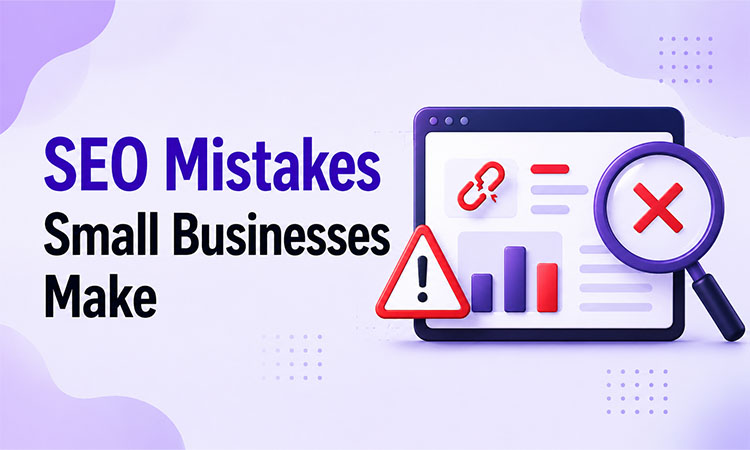
Small businesses have a time with search engine optimization because they either do not do the basics or they try to find quick fixes that do not work in the long run. They make mistakes like not researching keywords having weak content on their website, slow page speed, inconsistent business information and not doing local search engine optimization. These mistakes hurt their visibility online. They not make their search engine rankings go down but they also affect how much people trust them how much traffic they get and how many customers they convert.
Search engine optimization is something small businesses really need to do. People use search engines a lot to find products and services in their area. If a website is optimized well it can get traffic from search engines make the brand look more credible and attract customers who are really looking to buy something without having to spend all their money on paid ads.
This guide talks about the mistakes small businesses make with search engine optimization why these mistakes are a problem and how to fix them. It also gives tips, real life examples, a plan of what to do first and strategies to make rankings and visibility better over time.
Why SEO Matters for Small Businesses
Search engine optimization helps businesses show up in search results when people look for things online. If someone looks for a restaurant a law firm, a construction company or a salon the businesses with search engine optimization are more likely to show up first. Good search engine optimization makes a website more visible makes people trust it increases traffic and generates leads. It is better than paid ads because it can keep bringing traffic for months or years after the website is optimized. However many small businesses hurt their rankings by making mistakes they could avoid.
Search engines, like websites that have content are easy to use work well on mobile phones and have trustworthy business information. Businesses that do not optimize these things have a time competing online. Small businesses need to do search engine optimization to appear in search engine results. Search engine optimization is important for small businesses to get traffic and generate leads.
Ignoring Google Business Profile
One mistake businesses make with local SEO is not setting up or updating their Google Business Profile. Many businesses leave their profile incomplete. Don't update it after creating it.
This is a problem because where a business shows up in search results depends on having accurate information about it. If a profile is incomplete with missing services, photos or hours it will not show up much in local search results and on Google Maps.
To get the most out of their profile businesses should add contact details, categories, hours, website links, services and good photos. Keeping the profile updated and engaging with customers helps improve rankings and builds trust with potential customers.
Inconsistent Business Information Across Directories
Another big problem with SEO happens when businesses use names, addresses or phone numbers on different websites. This inconsistency confuses people and search engines. For instance if one website has a phone number and another has a different address Google might not trust the business information. This can hurt SEO rankings.
To solve this businesses should check all their listings and make sure their business information is the same everywhere. Having information, across all directories helps build trust and makes search engines more accurate.
Poor Keyword Research
Many small businesses take a guess when it comes to keywords of doing their research to find out what people are actually searching for online. This can lead to them targeting broad keywords or ones that are super competitive which are hard to get a good ranking for.
For example if you are a plumber trying to get people to find you when they search for "plumber" is a lot harder than if you target something like "emergency plumber in Karachi" or "24-hour plumbing services". These longer keywords, often called long-tail keywords are usually easier to get a ranking for and they also attract people who are actually looking for what you have to offer.
Keyword Stuffing and Over-Optimization
Small businesses should use tools that help them research keywords to figure out how many people are searching for them how competitive they are and what people are trying to accomplish when they search for them. If you choose keywords that're relevant to your business and to your location it can really improve how visible your website is and the quality of the people who visit it.
Some businesses make the mistake of trying to cram keywords into every sentence thinking it will help them get a better ranking.. This is actually a bad idea, known as keyword stuffing and it makes your content hard to read and not very user-friendly.
Thin or Low-Quality Content
Thin content is a SEO mistake. Many websites just have a homepage and a short services page with not useful information. Search engines like valuable content that helps users. Short pages, with text usually do not rank well because they do not provide much value.
Businesses should make pages for each service, product or location. Writing blogs that answer customer questions can also help with authority and search visibility. Longer and better content usually works better because it covers topics thoroughly.
Ignoring On-Page SEO Basics
On-page SEO is made up of things like title tags and meta descriptions and headings and internal links and image optimization. A lot of businesses do not pay attention to these important things. If a page is missing a title tag or has a meta description it can make it so fewer people click on the page from search results. If the headings are not structured well it is harder for search engines like Google to understand what the page is about.
Each page of a website should have its unique title that has the main keyword and the location in it if that is relevant to the page. The meta descriptions should make people want to click on the page. They should clearly say what the page is about. The headings, on a page should be set up in a way using H1 and H2 and H3 tags to make it easy to understand the page content of the On-page SEO.
Poor Website User Experience
User experience is very important for SEO performance. A slow website makes users leave quickly. This increases bounce rates. Search engines look at how users behave on a website. They check how time users spend on a page how much they engage and how they interact. If users leave a website quickly search engines think the content is not useful.
Improving a websites navigation, readability and layout can make users happier. It can also improve SEO rankings. A clean design makes users trust a website. It encourages them to look at pages.
Slow Website Speed and Weak Mobile Optimization
Page speed is important, for SEO and user experience. Slow websites make visitors frustrated. They leave the website quickly. Most searches happen on devices. This makes a responsive design very important. A website that does not work well on smartphones loses traffic and rankings.
Businesses should make images smaller enable browser caching and compress files. They should use layouts that work well on all devices. Google PageSpeed Insights and GTmetrix can help find performance issues. They can also suggest ways to improve website performance.
Neglecting Customer Reviews
Customer reviews are super important for SEO and online trust. Businesses that ignore reviews miss out on improving their reputation and rankings. Positive reviews make customers more confident. Help them decide to buy. They also tell search engines that a business is trustworthy and an authority.
Businesses should ask customers for reviews and respond nicely to both good and bad feedback. Getting reviews all the time can really help a business show up more in searches over time.
Ignoring Backlinks and Citations
Backlinks are still really important for SEO. Many small businesses don't build backlinks because they don't think they're that important. Backlinks from websites people trust help search engines see a business as believable and authoritative. Directory listings also help with SEO.
Businesses can get backlinks by partnering with others writing guest posts, sponsoring things, hosting events, giving testimonials and working with others in their industry. Good backlinks help rankings way more than bad spam links do.
Not Using Google Search Console and Analytics
Many small businesses do not check how well their website is doing on search engines. Without tools they cannot find mistakes drops in visitors or chances to improve. Google Search Console helps find problems with website indexing, errors when search engines visit the site, broken pages and which words people use to find the site. Special analytics tools show how users behave on the site, where visitors come from and how well the site converts visitors into customers.
Checking these tools often helps businesses make decisions about SEO and see how they are doing over time.
Real-World SEO Success Examples
Some small businesses have greatly improved their SEO performance by fixing mistakes.
* A bail bonds agency in Florida fixed SEO problems, made pages load faster and improved metadata.
The business started ranking high for search terms and got much more traffic within months.
* A beauty school got visitors from search engines by creating helpful blog posts and using relevant words.
Their visibility and ranking for words increased a lot over time.
* A construction company worked on SEO getting links, from other sites and creating pages for their services.
Their traffic and rankings got much better after they started doing SEO in a way.
SEO Action Plan for Small Businesses
The best approach to SEO is to prioritize. Businesses should start with things that make a big impact and are easy to do. For example they should claim their Google Business Profile fix any pages on their website make sure their titles and descriptions are optimized and improve how their site looks on mobile phones. The next thing to focus on is finding the keywords creating good service pages making useful content and improving local SEO. Long-term plans should include getting sites to link back, to yours getting more reviews updating your content and always keeping an eye on how you're doing. SEO is not something you do once. You need to keep working on it testing things and making changes to stay visible and compete online.
Conclusion
Small businesses lose a lot of customers and traffic because of SEO mistakes. These mistakes include using the keywords having low-quality content listing inconsistent business details having slow website speeds and ignoring local SEO. These issues really limit how much a business can grow online.
The good news is that most SEO problems can be fixed with some effort and a solid plan. By focusing on content making sure the website works well on mobile devices optimizing for local SEO improving technical aspects and enhancing user experience businesses can boost their rankings. This helps them attract customers without paying for ads.
SEO success doesn't happen overnight. Even small improvements can add up over time. Businesses that keep optimizing their websites checking their performance and adjusting to changes, in search trends will get visibility. They will also gain trust and achieve steady growth online.