
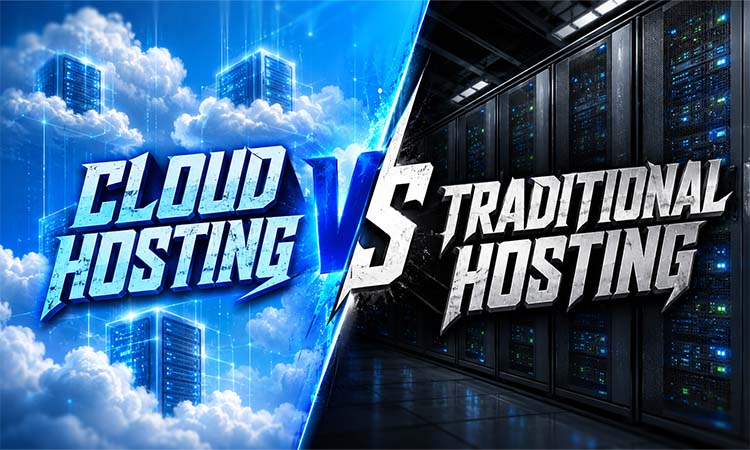
Choosing the hosting solution is really important because it affects how fast your website is, how secure it is, how reliable it is, how well it can handle a lot of users and how much it costs. You have two options: traditional web hosting and cloud hosting. Both of these keep your website and applications online. They are different in how they deliver, manage and price resources.
This guide is going to explain the difference between cloud hosting and traditional hosting. It will help businesses, developers and website owners pick the best option for them.
What Is Traditional Web Hosting?
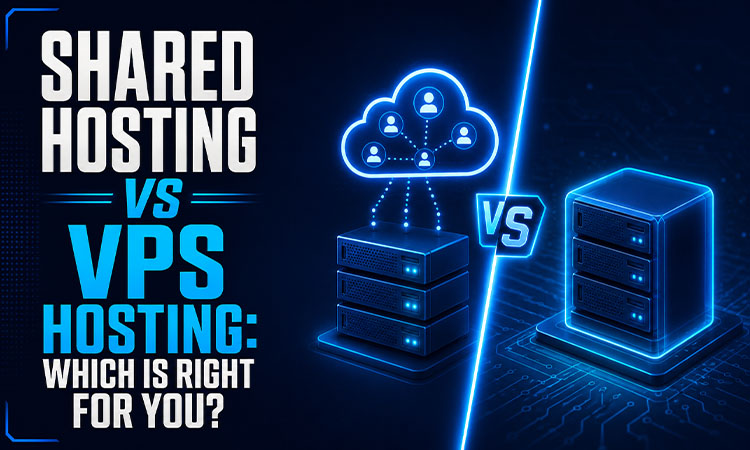
Traditional web hosting uses physical hardware. There are a types of traditional web hosting: shared hosting, VPS hosting and dedicated hosting.
* Shared hosting is when a lot of websites use the computer processor, memory, storage and bandwidth. It is cheap and easy to manage. If one website gets a lot of traffic it can slow down the other websites.
* VPS hosting is when one physical server is divided into virtual environments. Each customer gets a set amount of resources. Has more control.
* Dedicated hosting is when one customer gets to use the server, which means they have better protection and performance but it costs more.
The big problem with web hosting is that it has a limited capacity. When your website uses up all its resources you have to upgrade your plan move to a server or buy more hardware.
What Is Cloud Hosting?
Cloud hosting is when your website and applications are run on a bunch of virtual and physical servers. Of relying on just one machine it uses resources from a lot of servers and data centers.
* Cloud hosting providers can. Remove computer processor power, memory, storage and bandwidth as needed. If your website gets a lot of traffic they can give it resources without having to move it to a different server.
* Cloud hosting often uses machines, containers and serverless services. You usually only pay for what you use so it is an option, for businesses that are growing online stores, platforms that offer software, mobile applications and websites that have traffic that is hard to predict.
Architecture and Infrastructure
When it comes to the architecture and infrastructure traditional hosting is tied to one server or a group of servers. You get the resources you pay for ahead of time. If you need more you usually have to upgrade manually.
Cloud hosting is different because it separates your applications from the hardware. Your website runs on servers or containers that can move, restart or scale up or down on different machines.
Because cloud infrastructure is spread out your data can be copied in locations. If one server fails another one can keep your website running.
Performance and Speed
Cloud hosting works well when lots of people visit your site at the time. This is because it can spread the work across servers using special tools like load balancers, caching and content delivery networks.
For people visiting from countries cloud hosting can make your site load faster by showing them content from a server thats close to them.
Traditional hosting gives performance when not too many people are visiting.. If too many people visit or if the server gets too busy it can slow down. This happens when the servers brain (CPU) memory, internet speed or hard drive gets overloaded.
Small sites might do okay on hosting.. If your site gets a lot of visitors or is used by people all around the world cloud hosting usually works better.
Scalability and Flexibility
Traditional hosting makes it hard to handle growth. This is because it mostly uses a method called scaling. This means you add power to one server.. This can mean changing your plan moving your site to a new server, upgrading hardware or even taking your site down for a bit.
Cloud hosting makes it easier to grow. It uses both horizontal scaling. Horizontal scaling means adding servers to handle the demand. There are also tools that can automatically add power when you need it and take it away when you don't.
This helps sites stay fast during times like holidays new product launches or when a lot of people are talking about your site.
Cost and Pricing
Traditional hosting usually costs the same every month or year. You pick a plan with an amount of power and pay the same amount no matter how much you use.
This works well for sites that don't change much.. You might end up paying for more power than you need.. You might have to pay a lot more if you need to upgrade.
Cloud hosting costs change based on how much you use. You pay for the computing power, storage, internet speed database use and other services you use.
This pay-as-you-go pricing can be good, for sites that have changing amounts of visitors. You don't pay for servers that aren't being used.. If you don't watch your costs you might end up spending more than you expected.
Security and Compliance
Big cloud companies put a lot of money into keeping things safe. They use things like encryption and firewalls to protect peoples information. They also have to follow a lot of rules to make sure everything is secure.
Cloud security is a shared job. The cloud company makes sure the big computers are safe and the customer has to make sure their account and information are safe.
If a company has its server it is like having its own house. The company is in control of everything. It can make sure everything is safe. This is good for companies that have to follow a lot of rules.
If many companies share the same server it is like living in an apartment building. There are people around and it can be harder to keep things safe. In both cases everything depends on doing things like keeping the server up to date and making sure there are backups.
Reliability and Uptime
Cloud hosting is usually more reliable. This is because if one server breaks another one can take its place away.
Traditional hosting is like having one server. If that server breaks the website will not work until it is fixed.
It is possible for traditional hosting to be very reliable. It usually requires more work and equipment.
Management and Maintenance
Some types of hosting, like VPS or dedicated hosting require the user to do all the work. This includes keeping the server up to date and making sure it is safe.
Cloud hosting is easier to manage. It has tools that can help with updates, backups and security. This means the user has to do work but it can be harder to learn how to use cloud hosting.
Shared hosting is a choice for people who are just starting out while cloud hosting is better for people who know what they are doing and need more flexibility.
Best Use Cases
Cloud hosting is a choice for online stores, big applications and websites that have a lot of traffic.
Traditional hosting is better for websites, blogs and companies that do not need to change much.
The best choice depends on how money you have how much traffic you get what you know about technology and what you need to do.
Cloud Migration Considerations
Moving from hosting to cloud hosting requires some planning. There are a ways to do it including rehosting, replatforming and refactoring.
Rehosting is like moving to a house. You take everything with you. Do not change much.
Replatforming is like getting some furniture. You keep some things the same. You also get some new things.
Refactoring is like building a new house. You start from scratch. Do everything differently.
To make sure the move is successful you need to plan including making a map of what you have checking for security problems testing everything making backups and thinking about how much it will cost.
Final Verdict
Traditional hosting is simple and easy to understand. It is a choice for small websites that do not need to change much.
Cloud hosting is more flexible. Can handle more traffic. It is a choice, for big applications and companies that are growing.
If you have a website that does not change much traditional hosting might be enough.. If you have an application that needs to be fast and reliable cloud hosting is usually the better choice.