
Differences, SEO Strategies, and Best Practices
Introduction
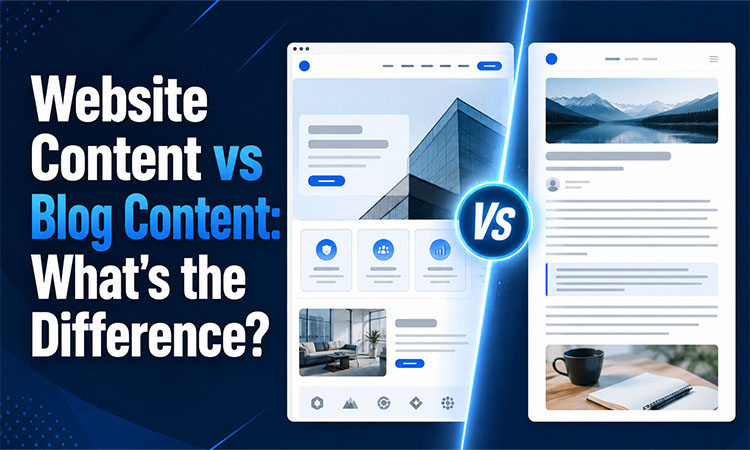
When it comes to content, website pages and blog posts are both important but they do different things. Website content is like a introduction to your business it tells people about your products, services. What makes you special. Blog content is like a teacher it helps people learn answers their questions and brings in new visitors from search engines.
Knowing the difference between website content and blog content can really help businesses improve their search engine rankings make their content easier to read and get more people engaged and interested in what they have to offer. Website pages are mainly used to turn visitors into customers while blog posts are used to teach, attract and build trust with people.
What Is Website Content?
Website content is the pages of your website that do not change very often. Examples of these pages are Home, About, Services, Products, Pricing, Contact and special landing pages.
These pages explain what your business is, what you offer and what you can do for people. They are like a brochure. Are updated when something important changes, like prices or new services.
The writing on these pages is usually short, polished. Tries to get people to take action. It often includes things like "Request a Quote " "Buy " "Contact Sales," or "Book a Consultation."
What Is Blog Content?
Blog content is like a series of articles that are published regularly in a Blog Resources, News or Insights section. Each article usually focuses on one topic or question.
Some common types of blog posts are guides on how to do something, comparisons updates on what's happening in an industry checklists, case studies and articles that show you are an expert in something. Blog posts are often. Updated when the information in them is no longer correct.
The goal of blog posts is to answer peoples questions help your website show up in search results and establish your business as an authority in your field. A good blog can also send people to products, services or resources.
Key Differences Between Website and Blog Content
Purpose and Audience Intent
Website pages are used to support your business goals. People who visit these pages may be comparing companies checking prices asking for more information or getting ready to buy something. They are usually looking to make a purchase or do something
People who read blog posts usually want to learn something or solve a problem. They may not be ready to buy something but if your content is helpful it can move them closer to making a decision.
Structure, Tone, and Frequency
Website pages usually have a structure with a strong headline, short sections and a clear call to action.
Blog posts are usually longer and more detailed. They use headings, examples, lists, pictures and links, to articles. The tone of blog posts can be more conversational and helpful.
Website pages stay the same for a time and are updated when necessary. Blog posts are published regularly. Older posts may need to be updated to keep them accurate and relevant.
SEO Differences
When it comes to search engine optimization both website pages and blog posts need to be optimized. They have different ways of using keywords.
Website pages usually use keywords like "CRM software" or "web design services" that a lot of people are searching for. Each page should focus on one keyword and related words.
Blog posts are better for using keywords like "best CRM for small businesses" or "how to choose a cordless vacuum cleaner". These keywords are often used by people who are still doing research.
Both website pages and blog posts should have:
* A unique. Description that search engines use
* One main. Some smaller headings that describe what the page is about
* Keywords used in a natural way
* Links to relevant pages on the website
* Images with descriptions that search engines can read
*. Easy to read URLs
* Special data that can help search engines understand the page better like what the page is about and what it is selling.
Internal Linking and Content Clusters
Internal linking is when you connect blog posts to website pages. For example an article can link to related posts or to pages that sell products or services. This helps readers find what they are looking for and helps search engines understand how things are related.
Website pages can also link to blog posts when people need information. This helps to build authority. Makes the website more visible to search engines.
Conversion Goals and Metrics
Website pages are designed to get people to do something like make a purchase or fill out a form. They should have one goal and make it easy for people to do what they want. We measure how well they do by looking at things like how many people convert how many sales are made and how many people bounce away.
Blog posts are different they are designed to give people information and then maybe get them to do something else like subscribe or visit another page. We measure how well they do by looking at things like how many people visit how long they stay and how many people share the post.
Practical Tips for Website Pages
Make it clear what your business does and what you are selling. Use a headline and opening paragraph that explains what you do and why it matters.
Give each page one goal and make it easy for people to do what you want. Use paragraphs, clear headings and relevant images. Make sure to put your keyword in the title, URL and main heading. Keep your pages easy to use on devices and make sure they are easy to navigate. Review them regularly to make sure they are up, to date.
Practical Tips for Blog Posts
When you write a blog post start with a question that your readers might be asking or a keyword that they might be searching for. The title of your blog post should tell readers what they will learn from it.
You should begin with an introduction that grabs peoples attention. Use headings that describe what each section is about. Give examples. Make lists to help explain things. You can also use pictures and other visuals to make your blog post more interesting. Make sure you cover the topic but do not include extra information that is not necessary.
You should also add links to pages and posts on your website that are related to the topic. At the end of your blog post you should tell readers what you want them to do next like sign up for your newsletter download something get in touch with you or look at one of your products. If some of your blog posts are very popular you should update them when things change, like facts or trends.
Which Format Should You Use?
If you want to tell people about your company, what you do what you sell how much it costs or how to get in touch with you you should make a page on your website. This is because you want people to do something like buy something from you.
If you want to answer a question teach people how to do something give advice talk about something that is trending or help people find what they are looking for you should write a blog post.
The best way to do things is to use both website pages and blog posts. Blog posts can help people find your website and learn about what you do. Website pages can help turn those people into customers.
Conclusion
Website pages are where you put the important information about your business. They should help people who are searching for something to buy. They should encourage people to do something like make a purchase. Blog posts are where you answer peoples questions help them find what they are looking for bring people to your website and show that you are an expert, in what you do.
If you match the kind of content with what your readers are looking for use the right search engine strategy and link related content together you can help people find your website make it easier for them to use build trust with them get them engaged and turn them into customers.