
Executive Summary
When deciding between an app and a website think about what your business needs. A website is usually a place to start. It is easy to launch and use on any device. You can also update it easily. It works well with Google search.
* A website is great for getting customers because it can show up in Google search results.
* It is also good for making sales, providing customer support and sharing information.
A mobile app is useful when you want to keep customers coming back, offer personalized experiences or use device features like cameras and location tracking. Many businesses start with a website see if there is demand and then build an app if customers need to interact with them
What Is a Website?
A website is like a presence for your business. Customers can visit it using a browser on their computer, tablet or phone. A good website adjusts to screen sizes.
* Websites help businesses get visibility and credibility.
* They are great for making sales getting leads and supporting customers.
You can update a website quickly without needing approval from app stores. This means you can change things like prices, products or contact details easily.
What Is a Mobile App?
A mobile app is software you install on a smartphone or tablet. You can get it from the App Store or Google Play. Apps allow for interaction and personalized experiences.
* Mobile apps can keep users logged in and save their preferences.
* They can also send notifications support loyalty programs and work offline.
However apps take planning, design, development, testing and support. They must follow app-store rules. Might need to be optimized for different operating systems.
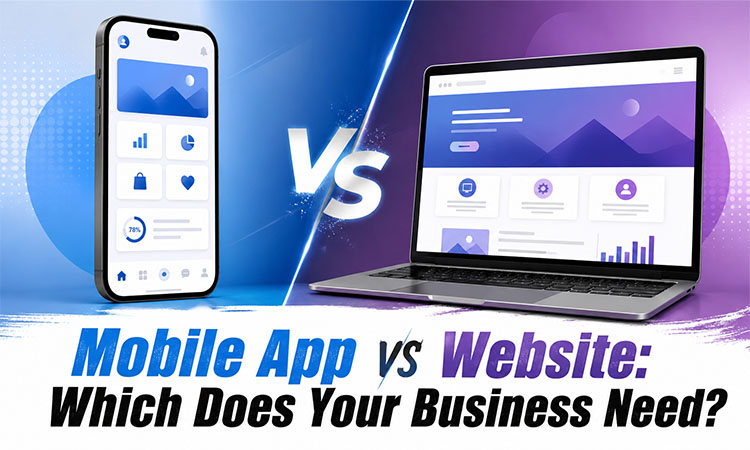
Mobile App vs Website: Key Differences
Discoverability and Reach
Search engines optimization can Show website pages. Users can visit a website by clicking a link without installing anything.
* An app is usually better for customers you already have.
* Its success often depends on being visible in app stores, advertising or promoting directly to customers.
Cost and Development Time
A business website is generally cheaper and faster to make. A simple website might take weeks while a custom one might take months.
* A mobile app usually costs more because it involves steps like design, development, testing and security reviews.
* A basic app might take a months while complex ones take longer.
Engagement and Retention
A business website is generally cheaper and faster to make. A simple website might take weeks while a custom one might take months.
* A mobile app usually costs more because it involves steps like design, development, testing and security reviews.
* A basic app might take a months while complex ones take longer.
Performance and Offline Access
Modern websites can be fast. Work well on mobile devices if they are properly set up. A mobile website can make users happier which can lead to more sales and more money.
Native apps usually work better when you are not connected to the internet and can talk to the device in a way. Progressive Web Apps can also let users install the app, cache data work a bit offline and do some things in the background.
Maintenance and Updates
When you update a website it usually goes live away. Developers can make improvements fix things or add features without needing anyone elses approval.
Updating an app is more complicated. It needs to be tested checked, sent to the app store reviewed, approved and then installed by the user. Businesses also have to make sure the app works with operating systems and devices.
Analytics, Monetisation, and Security
Both websites and apps can help you understand how users behave. Websites can track how many people visit what they search for how sales you make and what users do. Apps can track how many people install the app, how often they use it what events happen how many purchases are made how many users stay and what features are used.
Apps can make money through subscriptions, paid downloads things you buy inside the app and premium features but the app store might take a commission. Websites can also support subscriptions and online shopping without relying on the app store.
Neither option is automatically safe. Websites can have problems with access control, injection and authentication. Apps can have issues with storing data privacy problems, weak encryption and unsafe data handling. Both need development, testing, monitoring and governance.
Which Option Is Best for Your Business?
Small Businesses and Local Services
For consultants, clinics, salons, restaurants, trades, agencies and local providers a responsive website is usually a first step. These businesses need to be visible on Google build trust have service pages allow bookings and be easy to access.
Ecommerce, Hospitality, and Membership Businesses
A website works well when customers browse, compare or buy things occasionally. An app is more valuable when customers order frequently collect rewards, access memberships or consume content regularly.
Mid-Sized and Enterprise Businesses
Larger businesses often benefit from using both a website and an app. The website supports finding and getting customers while the app supports keeping customers loyal personalising experiences and making logged-in experiences convenient.
Real-World Examples
Starbucks shows how an app can be central to keeping customers. Frequent ordering, loyalty rewards saved payments and mobile collection make the app important for customer retention.
Ray-Ban shows how optimising a website can be valuable. Better mobile performance led to conversions, on product pages and lower exit rates proving that a fast website can be a major sales channel.
KQED demonstrates the benefits of -platform development. A shared codebase helped the organisation rebuild its experience faster improve ratings and increase the speed of releasing new features.
Hybrid Options for Businesses
A Progressive Web App is great for businesses that want an app- experience without spending too much on development. It lets you install the app, cache data use it offline a bit and have a friendly site.
When a business needs an app that works on both iOS and Android but doesn't want to do duplicate work -platform frameworks like Flutter or React Native are helpful.
Final Decision Checklist
* Choose a website first if you need people to find you easily online want to look credible want to reach a lot of people want to launch and don't have a big budget.
* Choose an app if your customers use your service a lot and need features like push notifications, personalised experience, stored logins, loyalty programs, offline access or special device features.
* Choose an approach if you need to attract and keep customers but want to keep costs and development time under control.
Conclusion
For businesses a simple website that works well on all devices is a good starting point. It's easy to find accessible to everyone easy to update and good, for building trust and making sales.
A mobile app is a next step when you know customers will use it a lot and need a faster more personalised experience that uses device features. The best approach is to choose the option that matches how customers behave what your business wants to achieve your budget and your long-term plans.